
Current Conditions
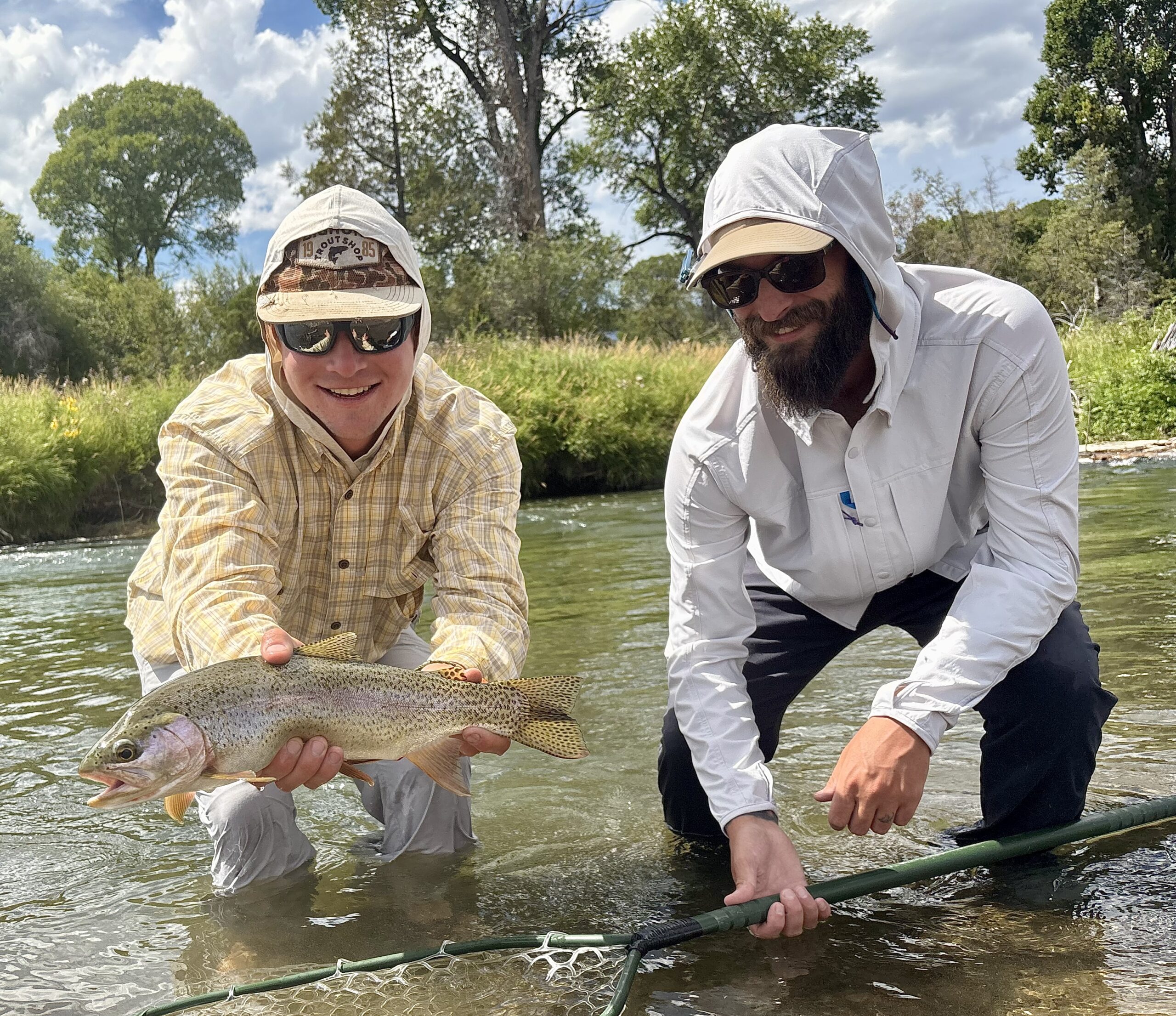
As September settles in, the Yellowstone River near Livingston is offering anglers good weather conditions, and less pressure on the River. This year the Yellowstone has experienced some near historic low flows; However, with the grace of cooler weather and some afternoon thunderstorms, we have avoided any Hoot Owl Restrictions. That being said the water is low so it can heat up quickly on a hot day so get out early and watch the water Temps as we get into Fall. The water is clear, flows are low but steady, and the cooler mornings are keeping the fish active. It’s shaping up to be a classic fall season on the Yellowstone and the closer to winter we get the better the fishing will be!
Techniques
- Dry Fly Fishing: Ants, Beetles, Parachute Adams and slimmer (low profile) dries seem to be enticing the trout more than some of the Larger dries. The hopper bite has been sporadic, with some days feeling doggy. Larger terrestrials like Chubby Chernobyls and Hoppers are a great start for a hopper bite or when evidence of Stoneflies are found. Don’t be afraid to pair your larger flies with a dropper nymph like a Perdigon or a Pat’s Rubberlegs for added success.
- Nymphing: In the absence of significant hatches, nymphing remains productive. Focus on riffles and deeper runs where fish are holding in the oxygenated water, behind boulders, and on the drop offs. Stonefly and Caddis patterns, as well as some all-purpose nymphs have been effective. Such as Perdigon nymphs, Pheasant tails and Hares’ ears.
- Streamer Fishing: Early mornings are prime time for streamers. Woolly Buggers, Sparkle Minnows, and Sculpin patterns have been enticing aggressive strikes from Bigger Trout, as well as some larger articulated streamers. Focus on the coldest water temps. Once the water starts getting warm (65 degrees or so) the trout seem to be “Slapping” more than striking the streamers and more lethargic.
Recommended Flies
- Dry Flies: Chubby Chernobyl (#8-12), Parachute Adams (#14-16), Hoppers (#10-12), Ant patterns (#14-16), Stimulators (#12-16), Caddis (#12-16).
- Nymphs: Zirdle Bug, olive and natural (#12-10), Pat’s Rubberlegs (#8-10), Picky Eater Perdigon (#12-16) Psycho Prince Nymph (#10-14), Hare’s Ear (#14-18), Copper John (#14-18).
- Streamers: Woolly Bugger (#6-8), Sparkle Minnow (#6-8), Lil’ Kim (#4-6), Zonker (#4-6), Peanut Envy, olive yellow and black (#2-4), Galloup’s Dungeon, olive yellow and black (#2-4)
Hatch Activity
While major hatches are minimal, anglers can expect sporadic BWO (Blue-Winged Olive) activity, particularly on overcast days, Some Nocturnal Stone activity primarily in the early mornings, and here soon the October Caddis! These hatches can prompt surface feeding, especially in the Paradise Valley stretch.
Conservation Note
As brown trout begin to spawn, it’s crucial to avoid stepping on or disturbing redds (spawning nests). These are typically shallow, gravel depressions in the riverbed. Disturbing them can harm developing eggs and affect future fish populations.
Check out our Videos on Identifying and Avoiding Trout Redds.
0
Leave a Reply
You must be logged in to post a comment.