Sweetwater Fly Shop Fishing Report
By Max Smith
Yellowstone River
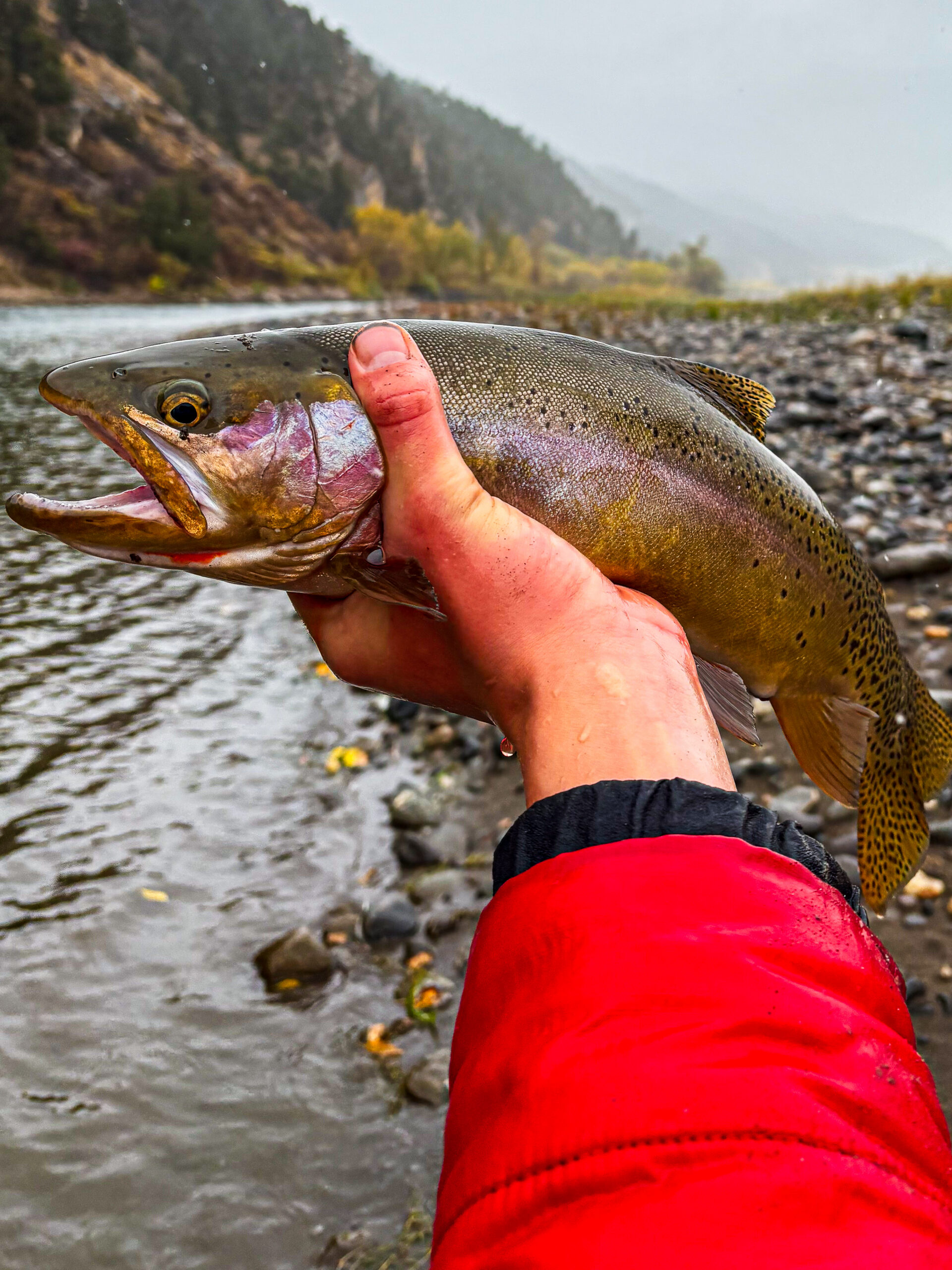
The Yellowstone has been fishing well, and the smaller rubberlegs have been producing consistently over the past couple of weeks. They show no signs of slowing down, and pretty much any color in a size 10–14 has been a great option. As water temperatures continue to cool and trout begin settling into their fall and early winter patterns, stonefly nymphs remain a great pattern. Their larger profile offers a substantial meal, making them a good option for covering water and finding actively feeding fish.
Short-leashing close to the banks has been especially productive, particularly around softer water and the edges of deeper runs. As the water cools, trout will often slide out of the faster current and settle into softer holding water where they can conserve energy while still having access to food. Getting flies tight to the bank and allowing them to drift naturally through these areas can make a big difference.
A smaller, flashier fly trailing behind the rubberleg is another great combination. Blowtorches and Psycho Princes in sizes 14–16 have both been producing well. The Blowtorch can attract its fair share of whitefish, but it still picks up plenty of trout. Having something a little different behind the larger rubberleg gives fish another opportunity to eat, especially when they aren’t interested in the larger fly.
Weather is also worth paying attention to this time of year. Cloudy and overcast days can offer some great fishing opportunities, particularly when temperatures are relatively mild. Lower light conditions can make trout more comfortable moving out of their usual holding spots, while overcast afternoons can bring on better Blue-Winged Olive activity. Keep a few smaller BWO patterns handy, as fish may begin looking up when these hatches get going. The afternoon hours are generally worth focusing on.
Streamers are also worth keeping in the rotation, particularly for anglers looking to move a larger brown trout. Some of the same patterns recommended for the spring creeks, including Sparkle Minnows, Slump Busters, and Zonkers, can be good options on the Yellowstone as well. Focus on deeper runs, softer edges, and slower holes where larger fish can hold without fighting the heavier current. As fall progresses and brown trout become more active, streamer fishing can offer some great opportunities.
Paradise Valley Spring Creeks
DePuy’s has been fishing well recently and is definitely worth spending some time on. As the fall season progresses, more brown trout are moving into the creeks, making this an great time of year to fish them. With the brown trout fall run underway, egg patterns are becoming a good option. Don’t be afraid to fish something with a little more color and visibility, especially around deeper runs and areas where fish are staging. Jig-head patterns have also been producing some really nice fish on DePuy’s, particularly in the deeper holes. These deeper sections are worth paying attention to, as they provide comfortable holding water where trout can conserve energy while still having access to food moving through the current. Getting a fly down into these areas can be especially important when fish aren’t actively feeding near the surface. A well-presented jig-head nymph can be a great way to reach fish holding close to the bottom.
Streamers are another great option this time of year, especially with larger brown trout moving into the creeks. A Sparkle Minnow is always a good choice, but there are plenty of other patterns worth having in the box. A Lil’ Kim, Skittish Smolt in olive, Slump Buster, and Jig Zonker can all be productive. A Thin Mint in a size 8 is another pattern worth considering. Baby Gonga patterns in rainbow or gray are also worth having in your streamer box. Having a variety of colors and profiles can be helpful when trying to find what the fish are willing to chase on a given day.
For those wanting to stick with smaller flies, there are still plenty of good options. Scuds and sow bugs in sizes 16–18, especially with a hot bead, are worth fishing. These are important food sources in spring creek environments and can produce fish throughout the season. A good selection of midges and baetis patterns is also worth carrying, including a size 20 Zebra Midge, Blood Blister Midge, Pheasant Tail Slim in sizes 20–24, Split Case BWO in a size 18, and Rainbow Warrior in sizes 18–20.
Weather can play a big role on the spring creeks as well. Cloudy, overcast days can be especially productive, particularly when there is little wind. The lower light can make shy spring creek trout more comfortable feeding throughout the day, and gray afternoons can bring on Blue-Winged Olive and midge activity. Keep an eye out for subtle rises, especially around the warmer parts of the afternoon. Even when there isn’t much happening on the surface, fish can still be feeding consistently right below it.
Don’t overlook a small ant either. Even as the weather cools, a smaller terrestrial can still be worth trying, particularly when fish are being selective and looking for something a little different. Between the streamer opportunities, fall brown trout movement, and consistent subsurface fishing, the spring creeks are offering plenty of ways to find fish right now
Yellowstone National Park
For those looking to get into Yellowstone Park, the Gardner River is a great option this time of year. Unlike most park waters, the section below Osprey Falls remains open to fishing year-round, providing a great opportunity to get out on the water even after the general park season closes.
Similar to the Paradise Valley spring creeks, brown trout are moving into the river for their fall spawning season. This makes it a good time to have some egg patterns and streamers in the rotation. Larger brown trout can become more active during this time of year, making streamer fishing particularly productive.
On the nymphing side, smaller rubberlegs in sizes 10–14 are a great place to start, especially in the deeper runs and pockets. Egg patterns can also be productive, particularly around deeper holding water where trout are feeding on drifting eggs and other food sources.
Overcast days can offer some excellent opportunities as well, with lower light conditions sometimes encouraging larger trout to move out of cover. Keep an eye out for afternoon BWO activity, and don’t overlook the deeper pools when searching for larger fish. Between the fall brown trout movement and year-round access, the Gardner is a great option for extending the fishing season.
The Madison River is another great option for those fishing in the Park. With the river remaining open, anglers can still find some good opportunities this time of year. Worm patterns are always worth having in the rotation, along with smaller nymphs and attractor patterns. Focus on deeper runs and softer holding water, and again, don’t overlook cloudy days when trout may be more comfortable moving around and feeding throughout the day.

Leave a Reply
You must be logged in to post a comment.